


Action Agents
19 Aug 2025



Latest Posts




Related Posts
Jul 2025
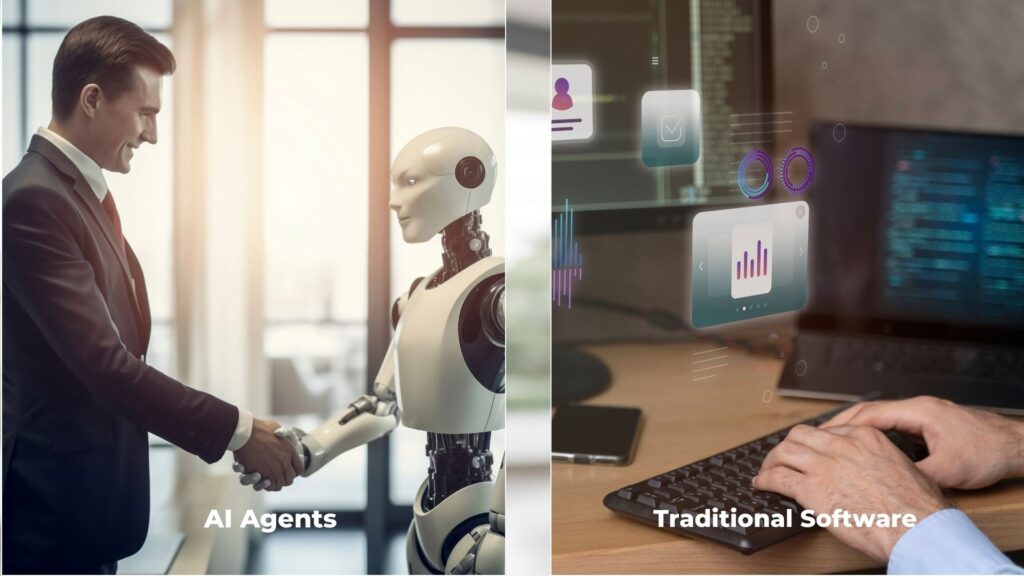
AI Agents vs. Traditional Software: A Comparative Analysis for Business Leaders
Introduction: The Evolution of Business Tools Software has been an automatic outlet in the fast-paced globe of technology. Traditional software, from a basic accounting system to CRM, has played an indispensable role in enhancing productivity, while still companies at all times relied on them. But now, Happy with the emergence of AI agents, all this is set to change. Highly intelligent assistants whose thinking processes can learn and adapt, AI agents are not automation tools but the future of business. How do AI agents compare with traditional software? Let's dive into this comparative analysis and help business leaders make the right choices. Traditional Software: Bedrock of Business In the last few decades, traditional software has been at the very core of businesses across the world. From Microsoft Office, to Salesforce or QuickBooks, the usage of these products dramatically altered the way companies work. They can be trusted, tested, and certified, with pre-defined functions users can operationalize directly from the box. The problem is, though, that traditional software, albeit effective, is static. It is bound by predefined rules and workflows and can only be changed and thus improved through human activities that update it. AI Agents: The Next Leap in Business Evolution AI agents are of a different species. Other than automating tasks, they will learn based on those data accumulated and improve with each passing day. This is unlike traditional software that has a farthest difference from AI agents as it doesn't analyze patterns or forecast results to take decisions by real-time information. More importantly, AI agents adapt to the unique needs of each business, so flexibility and capability are much more superior with them than traditional software. Key Differences Between AI Agents and Traditional Software 1. Flexibility vs. Predesigned Rules Traditional Software: Based on prefabricated workflows and rules. Once set up, it simply repeats tasks as you had initially told it to do. Users have to intervene manually and configure updates to alter their behavior. AI Agents: Learns continuously from the data that passes through it. If there’s a new trend or pattern of how the customers will behave, AI agents can automatically pick this without having to manually do so. 2. Automation Capabilities Traditional Software: For instance, can automate several repetitive tasks, such as sending out emails or generating reports, but may not and does not normally handle more complex aspects on its own and requires human intervention for much of the process. AI Agents: While it may still need human intervention at some point, AI agents can still handle complex automation tasks - such as managing an entire workflow, making data-driven decisions, as well as predicting a customer's needs. It decreases the requirement for constant human input. 3. Decision-Making Power For traditional software, it only provides tools used by humans to make decisions, yet can not make decisions on its own. It has reports and analysis available but still requires human inference. For AI agents, this generation of insights does not only stop but can also give recommendations and make proper decisions in the dynamic business environment to prompt faster decisions. 4. Customization and Flexibility Proprietary Application: Highly flexible, but major customization requires lots of development time and resources. Modifications are not easily done once it is configured. AI Agents: Can be very flexible. They can change their responses and actions relative to the preferences of the users, history, and evolving business goals. The more they learn and mature, the less they need to update and fine-tune. 5. Scalability Traditional Applications Scalability is costly and time-consuming for traditional applications. Their ability to expand user bases or increase capabilities typically leads to a commensurate requirement for more licenses or significant upgrades. AI Agents: AI agents are inherently scalable. As the business grows, AI agents can handle a heavier workload, without expensive upgrades or high infrastructure needs. 6. Cost-Effectiveness Traditional Software: Typically incurs charges for licensing the front-end, maintenance every month, and maybe upgrade costs as well. Businesses will also need to have internal IT employees who will manage the use of software. AI Agents: Although the cost of front-end deployment by AI agents can be very high, they can often improve themselves and automate complex tasks over time, which may reduce cost in the long periods, especially in aspects such as customer care, data analysis, and sales. Use Cases: Know When to Prefer AI Agents Over Traditional Software Many business leaders are confused about whether to invest in AI agents or stick to traditional software. The bottom line to that answer comes from the specific needs of the business. Here are a few common use cases where AI agents are considered a better choice than their traditional counterparts: Customer Support: AI agents like chatbots can provide 24/7 customer support because queries can be quickly answered and possibly issues are resolved that cannot happen in systems with human involvement and traditional support systems. Sales and Marketing: AI-powered lead generation tools can automatically find and nurture leads based on real-time data, something no traditional CRM system can guarantee without really significant customization. Operational efficiency: AI agents assist in fine-tuning supply chain processes, monitor real-time data, make adjustments on the fly, minimize delays more dramatically than ERP systems can by default, and thus increase productivity to a significantly higher extent. Challenges and Limitations AI agents come with their challenges and limitations. The agents draw only the best data available and require infrastructure to function well; the business has to invest in the infrastructure of various AI tools. Ethical dilemmas are another challenge; in hiring and in customer service, for example, AI may pose problems regarding the decision-making algorithms. Conclusion: The Future of Business Efficiency In this war between AI agents and traditional software, the upper hand is not one over the other-it's about having the right tool for the job. Traditional software has played wonders for businesses in their current form for decades, but AI agents offer businesses new opportunities if they are willing to adapt, scale, and climb up the ladder of competition in a competitive market depending on the decision made to know where investments should be focused. The future, therefore, lies not only in the substitution of AI agents but also in how well both worlds integrate to create efficiency, responsiveness, and innovation in the workplace. More winners than losers will be the businesses that know which of each world to harness well.
Jul 2025
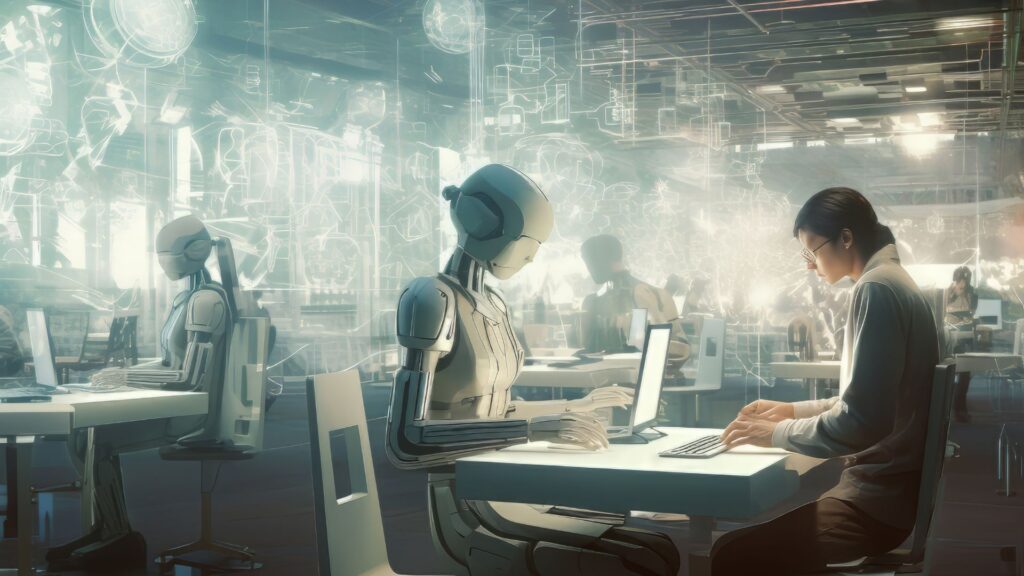
Redefining Efficiency: How AI Agents Are Transforming the Modern Workplace?
Introduction: New chapter in AI at the workplace In the busy world of today, productivity and efficiency for business products are at an all-time high. There comes AI agents: smart and flexible tools that have surprisingly become essential in the workplace. They change the way we do things every day, freeing up some thinking, creative time, and strategy to be used. So what do these AI agents do, exactly? How are they changing our working lives? Let's find out. AI Agents: The New Benchmark for Efficiency AI agents are very different from other software or tools. They can learn, adapt, and improve over time. They do not follow the rules rigidly since they evolve from data and experience to create something much more productive than any previous automation tool. What is impressive is these agents do complicated tasks taken over by humans. They also execute them sometimes even faster and more accurately. Key Ways AI Agents Are Changing the Game AI agents are no longer supporting agents but game changers in businesses. Here are some significant areas where such agents make a great difference: Administrative Tasks Made EasyAI agents undertake simple routine administrative tasks such as scheduling meetings, calendar management, and file keeping. For instance, with us, one can easily have an agent aschedule the whole team with minimal back-and-forth email arrangements. Better Data AnalyticsNo longer need to spend hours sifting through miles of spreadsheets. AI agents can scan the most tremendous volumes of data in seconds, offering business-informing insights into key trends and events, no matter how minor, which may have been missed by a human. Customer Support on AutopilotAI agents have revolutionized customer support to an extent where any business can implement customer service on autopilot. The digital assistants can respond quickly to simple questions, send complicated problems to human operators, and even anticipate a customer's needs. This means that, above all, it's game-changing for businesses interested in improving customer satisfaction without straining their resources. Marketing and Sales OptimizationThese AI agents are revolutionizing efforts across marketing and sales by optimizing marketing and sales through streamlined lead generation and campaign management. Marketing and sales AI agents get a comparative view of customer behavior and preferences and can therefore create personalized marketing strategies. Additionally, with better ad placement being made automated by these AI agents, they can reach out to their potential leads on social media. Employee Training and DevelopmentCompanies are now using AI agents for employee training and onboarding. These agents can provide customized learning modules, monitor progress, and provide instant feedback. In doing so, employees are receiving more personalized experiences in the training process that results in better retention and faster skill development. HR and RecruitmentStreamlined Recruitment has always been a cumbersome process. AI agents are now refining it by scanning through resumes, conducting initial interviews, and even identifying potential top candidates based on skill matching and behavior analysis. This will help the HR teams focus on more strategic roles while improving the overall hiring process. The Future of Work: Humankind, Evolved to Succeed in Partnership with AI Humans and AI Should Team Up; AI agents are proving to be radically efficient, but they don't replace human input. On the contrary, they perform at best when they team up with humans. Creativity, critical thinking, and emotional intelligence remain uniquely human strengths. We put together two winning skills: AI's capacity to process routine tasks and analyze data, and human ingenuity-namely, productivity and balance in a work environment. Conclusion: Artificial Intelligence Agents The Efficiency Revolution AI agents are no longer futuristic ideas-they are there, active contributors to our work lives, changing the way businesses are done. As they continue to emerge and evolve, companies embracing AI agents will have a competitive advantage over others, where they will become more efficient, innovative, and agile. Blending human ingenuity with AI efficiency brings a glow to the future of work, and we are just at the beginning.

Jul 2025
The Silent Takeover: 10 Jobs AI Agents Are Already Doing Better Than Humans
Introduction: The AI Revolution in the Workplace Let's face it-work world is changing fast. Earlier we were worried about jobs going overseas; now there's a new player in town: AI agents. These smart computer programs are shaking things up in ways we never expected.We're not talking about the robots on the factory floor anymore. Nope, these AI agents can write, think, and create sometimes even better than any human can. Pretty wild, if you think about it.But don't freak out just yet, and run to update your resume. It's not the end of mankind and AI taking all our jobs. It's more like how AI is reshaping the way we work. Some jobs are most certainly getting a makeover, though. Let's take a look at 10 areas where AI is already showing us up. The Rise of AI Agents: More Than Just Robots AI agents are far from the traditional computer program. They are intelligent, really, really intelligent. It is possible for them to learn from their mistakes and get better over time, and to do things that would require a human brain in some fashion. What's so special about them is that it does not necessarily mean they can process tons of information super-fast, find patterns and make decisions based on what they have learned. At times, they might do the job quicker and more accurately than a human being without getting tired or needing coffee breaks. But here's the fun part: AI agents don't only imitate what people do and to make things interesting, they can indeed come up with a way to make things work in a better way. That's the major reason why businesses of all sorts are embracing them nowadays. 10 Jobs Where AI Agents Are Killing It 1. Social Media Management Managing social media used to be a tedious process of sitting for hours in front of your phone. Now, with agents like Instagram Manager on ActionAgents.co, managing your social media can involve posting stories, creating reels, or even figuring out when the best times to post. They can look at what's working and what's not, making changes as they go. It's like having a super-smart social media expert working for you around the clock. 2. Customer Service and Chat Analyses Do you recall how last time you had to wait for hours on hold just to get someone on the phone to talk to customer service? AI is changing all that. Today, chatbots can solve so many customer questions instantly. But it gets even cooler - tools like the Chat Analyzer can understand how customers are feeling and spot trends in what people are saying. This helps businesses fix problems before they get big. 3. Content Creation and Repurposing Content was always a time-consuming piece in creating for the different platforms. Now, with AI agents like Content Repurposer, one piece of content can be rewritten and transformed into a myriad of things social media posts, e-mail newsletters, you name it. It's like having an entire team of writers at your fingertips. 4. Appointment Scheduling No more phone tag in trying to schedule an appointment. There are AI agents like Appointment Taker available 24/7 who speak in everyday language and accommodate your business hours. Think of having a super-efficient receptionist who never sleeps. 5. Lead Generation and Sales Support Whereas former days were focussed on hunting new customers by paying a visit to them with hopes that someone would generate interest, nowadays, with AI Agents like the Reddit Lead Generator, they will go out there hunting for possible new customers online, listening in on the conversation, and flagging the good ones for your sales team to follow up on it. It is as if you have a salesman that never sleeps-it only works around the clock to get that new business. 6. Web Maintenance and Auditing Keeping a website running was previously considered a full-time job. Content Auditor can now check your entire site for broken links, old information, and other problems. They will also suggest fixes and improvements. It is like having a website expert on call 24/7. 7. Recruitment and Job Search Support Job hunting and hiring were a huge hassle for both sides. AI is now making it easier at both ends. CV Analyzer can quickly sift through piles of job applications to find the best fit. Meanwhile, Job Finder can help job seekers by automatically applying them to jobs that best fit their skills. It is speeding it all up for both sides. 8. Personalized Shopping and Gift Selection Remember how funny online shopping recommendations were often completely off the mark? Think those days are over. AI agents like Gift Finder can suggest the ideal gift based on who you're giving it to, as well as for what reason you're giving it. It's like having a personal shopper who gets you. 9. Multilingual Content Creation Where once breaking into foreign markets meant finding just one or two translation companies to hire and then a bunch of translators, today, tools such as Multilingual Video Creator can take your content, translate it, and even create new videos with lip-syncing. This is opening up new markets for all businesses. 10. Visual Content Generation The only thing that you needed serious design skills for was making eye-grabbing visuals. Not anymore. With AI, you can get a logo, a product image, and even model shots, all whipped up without a real photographer and designer. It changes the game for small businesses and online stores that need to look legit on a shoestring budget.The Human Touch: What We're Still Best AtOkay, before you start thinking humans are obsolete, hold up. There are still plenty of things we're better at than AI. Things like understanding emotions, solving tricky problems, coming up with totally new ideas, and making big-picture decisions are still our turf. The best workplaces will probably be the ones that figure out how to mix AI smarts with human know-how. Preparing for the AI Future The better that AI becomes at doing more jobs, the more we need to adapt, to humans. And that doesn't necessarily mean trying to compete with AI at its game. It is about learning how to cooperate with AI. Build skills AI isn't good at yet--like interpreting data, managing AI systems, and doing creative problem-solving. That's the way to stay ahead of the game. Wrapping It Up: Rolling with the Changes So there is the story: AI on the job doesn't have to be feared, but rather it is an opportunity. Now we can all grow more efficient and creative by finding out how to use these new AI tools. In the future, it is not going to be humankind versus AI, but humankind working with AI to create something phenomenal.In this new world, the secret to success? Be flexible and keep learning. Tomorrow's jobs could be unlike today's jobs, but for sure they're going to include working with AI in new and exciting ways. We can profit from the best that AI has to offer and create a better work world if we remain open-minded and ready to be adaptable.So are you ready to welcome your new AI coworkers?